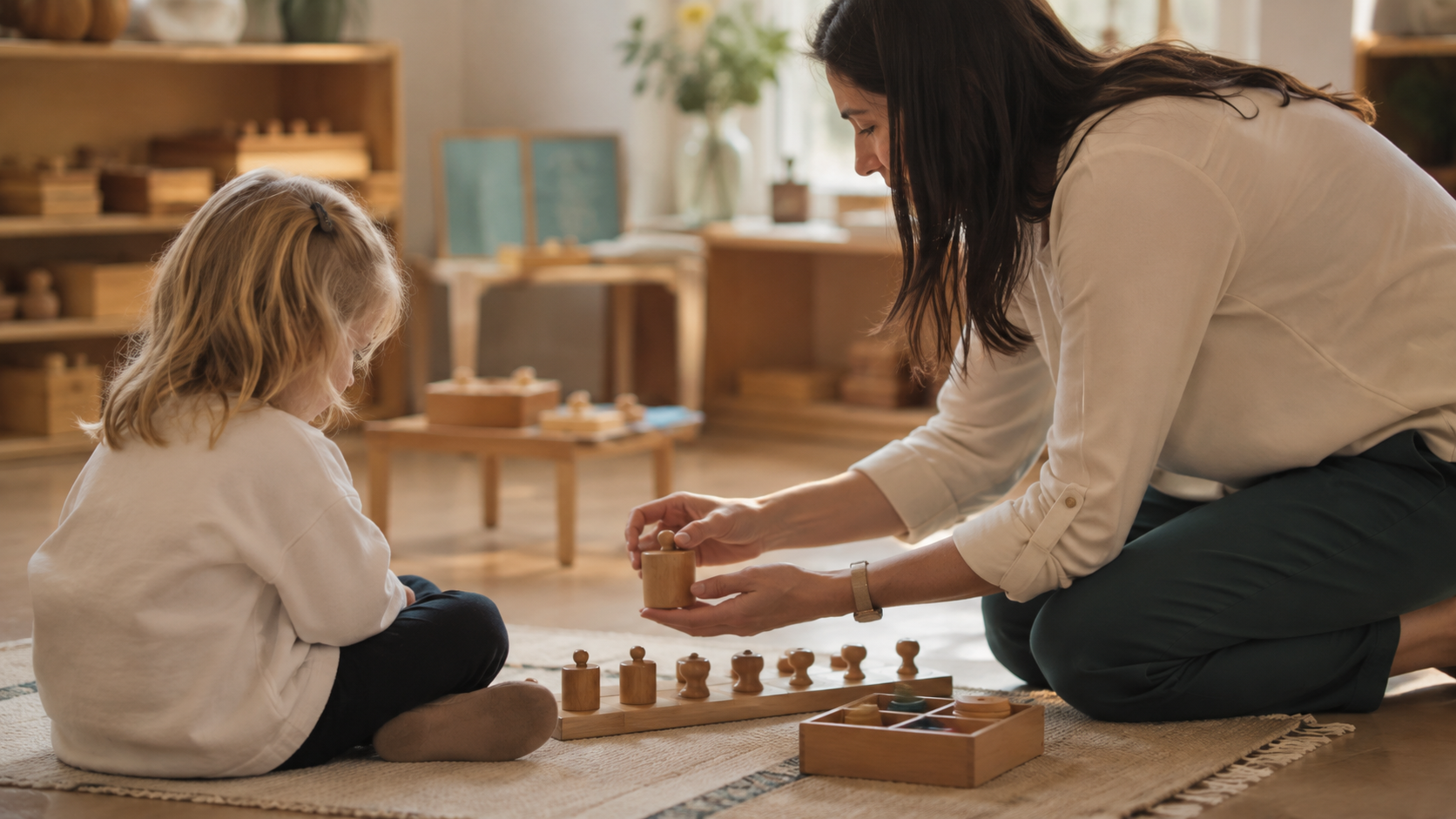
What, exactly, is the role of a Montessori teacher — and why is it so different from what most of us picture? Sometimes it's easiest to start with what a Montessori teacher isn't.
A Montessori teacher is less like a traditional instructor and more like a gentle guide. Their job isn't to hand a child information, but to lead them in the right direction and give them the tools to find it themselves. As Maria Montessori put it: "The greatest sign of success for a teacher is to be able to say, 'The children are now working as if I did not exist.'"
Guides Cultivate Independence
Step into one of our classrooms and you won't see a teacher at the front delivering the same lesson to everyone. Instead, you'll find a guide working quietly with an individual child or a small group, while the rest of the children are free to pursue the work that calls to them. A great deal of a guide's craft is building the structures that let children be independent and trust themselves as learners.
Much of that work is invisible: intentionally preparing an environment that's developmentally right, inviting, and supportive — and then adjusting it, in tiny ways, as the children's needs evolve.
Guides Are Trained to Think Like Scientists
Montessori guides are highly trained. Ours are AMI-trained, with recognized Montessori credentials in addition to their college degrees — and Montessori training is intensive, closer to earning another degree than to a weekend workshop. It's not just about how to use the materials; it includes deep study of Montessori philosophy, child development, and the arts.
For assessment, guides rely not on standardized tests but on the power of observation. They keep notebooks brimming with evidence of what each child has mastered, where they need support, and what they're curious about — sitting beside a child to understand exactly what they know across a wide range of subjects.
Guides Think Long-Term
Because our classrooms run in three-year cycles, a guide can hold the big picture. They can let children genuinely learn at their own pace, and getting to know a child and family well over several years makes that possible.
Why We Call Them "Guides"
Montessori is built on the idea of freedom within limits — and it's the guide's job to craft those limits with care. Children rely on structure; it gives them a safe place to take risks and try new things.
What if your second grader loves to read but avoids math? Their guide will make sure the math still happens — sometimes through a gentle conversation about priorities and time management, sometimes by weaving the child's interests into the less-favorite work, sometimes with a small change to the environment. Guides give children freedom, and then help them find their way to success within it.
Montessori guides value independence, self-reliance, and intrinsic motivation. And they value cooperation, kindness, and strength in community, too.
Still curious? Schedule a tour and come observe a classroom — and see what Montessori is really all about. You can also meet our staff.