
Montessori is a way of seeing your child
Long before it is a set of materials, Montessori is a lens. It assumes your child is competent, wants to contribute, and is working hard to become independent. When you begin to see your child that way, small daily decisions start to shift, and home becomes a place where that independence can grow. None of it requires a perfect house or a special budget.
Prepare the environment
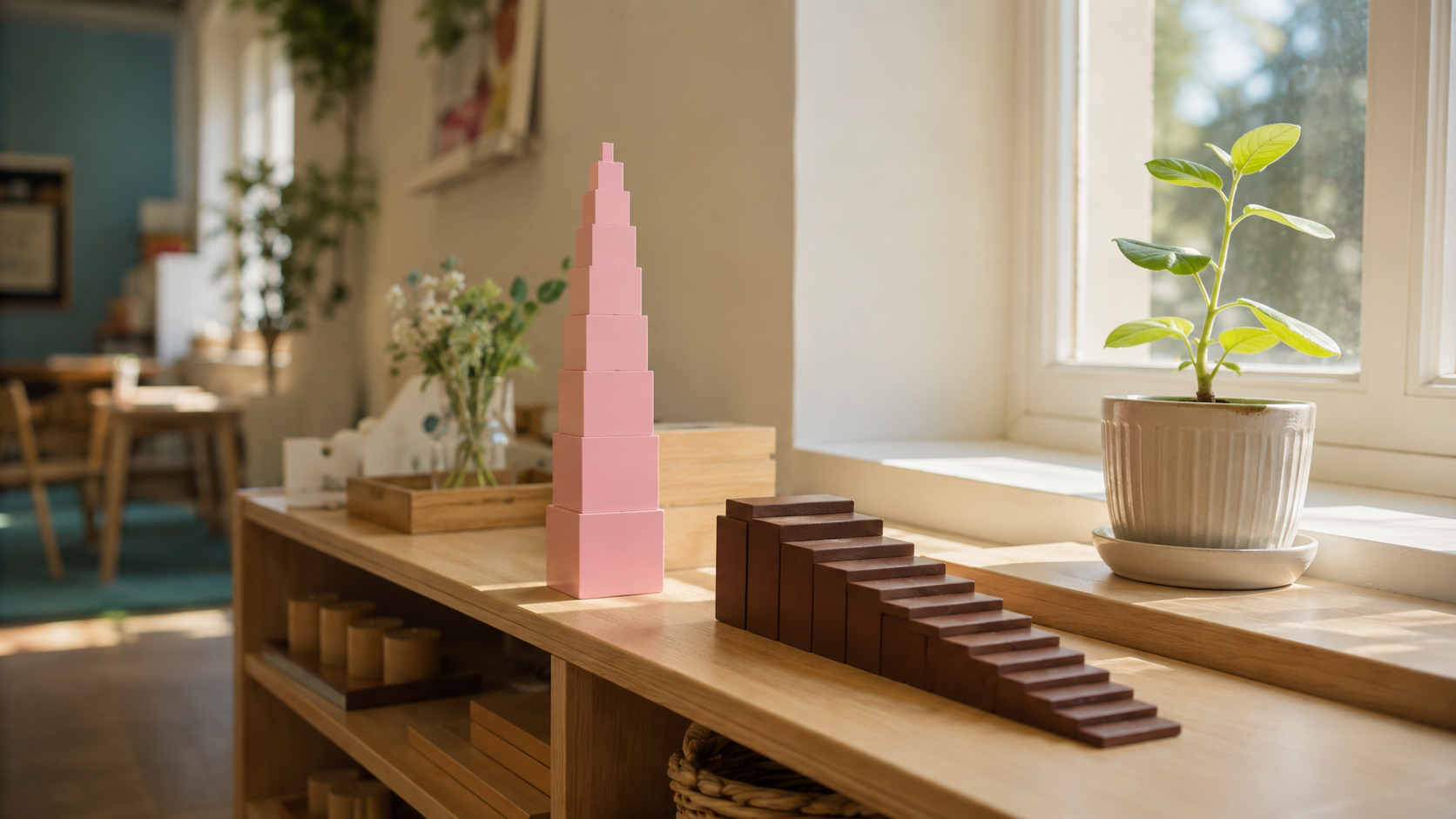
The single most powerful thing you can do is prepare your home so your child can be independent in it. Lower a basket of clothes they can reach. Put a step stool at the bathroom sink. Keep a small pitcher of water and a few real cups where they can pour a drink themselves. Store toys and books on low, open shelves rather than in a jumbled bin, and keep out only a few things at a time. A calm, ordered space invites calm, ordered behavior, and it quietly says: this home is yours too, and you are capable here.
Let practical life be real life
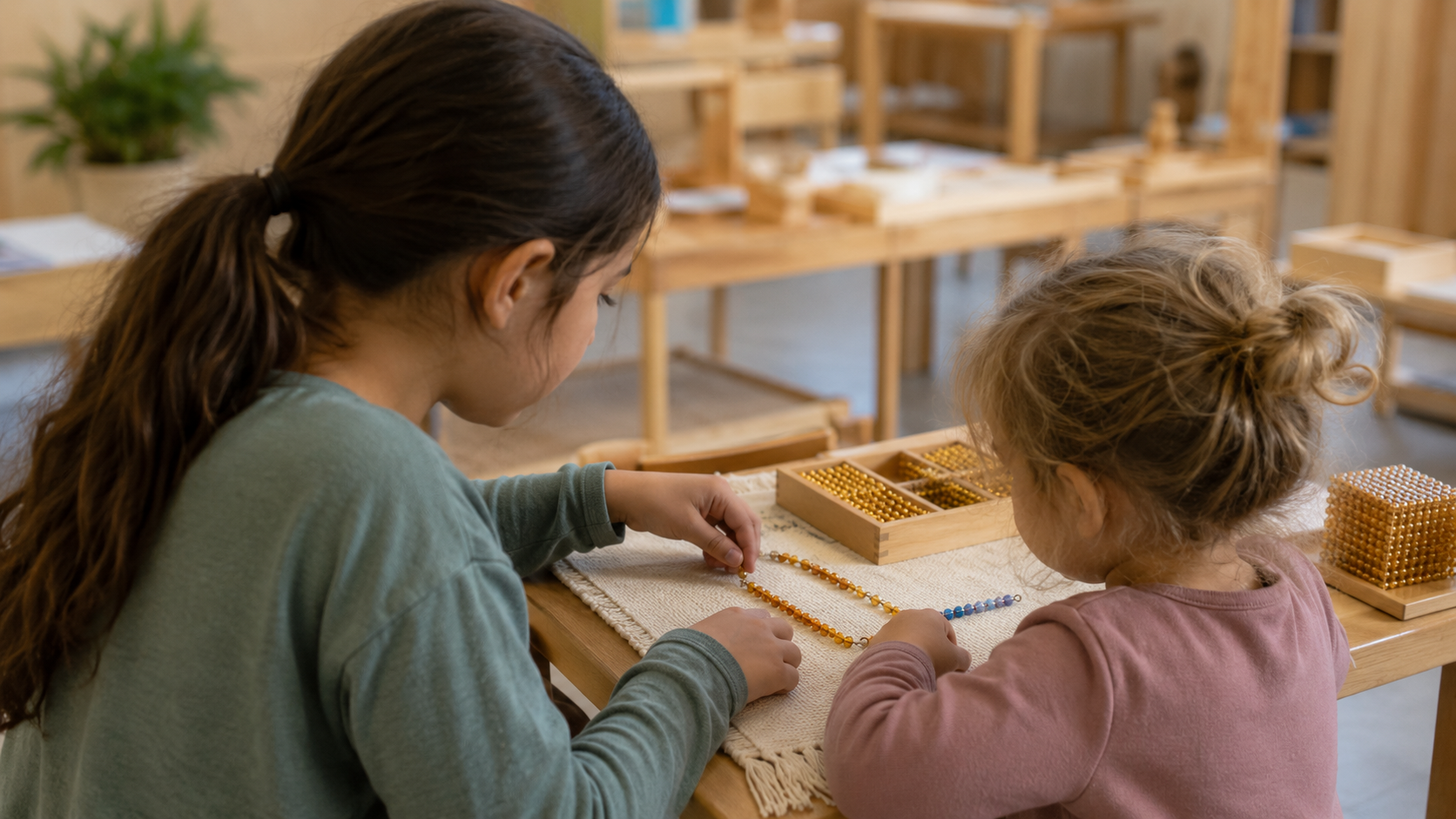
Young children are desperate to do the real work of the household, and practical life, in Montessori language, is exactly that. Let your toddler carry their plate to the counter, wipe a spill, water a plant, crack an egg, match socks. It will be slower and messier than doing it yourself. Do it anyway. This everyday work builds coordination, concentration, order, and a deep sense of I can, the foundation on which everything else is built.
Offer freedom within clear limits
Montessori is often misunderstood as letting children do whatever they want. It is the opposite of that, and also more generous than that. Children are given real freedom, to choose, to move, to try, but inside firm, consistent, loving limits. At home, that might mean your child chooses between two outfits you are happy with, rather than the whole closet. Freedom and structure are not opposites; together they build a child who can make good choices.
Observe more, direct less
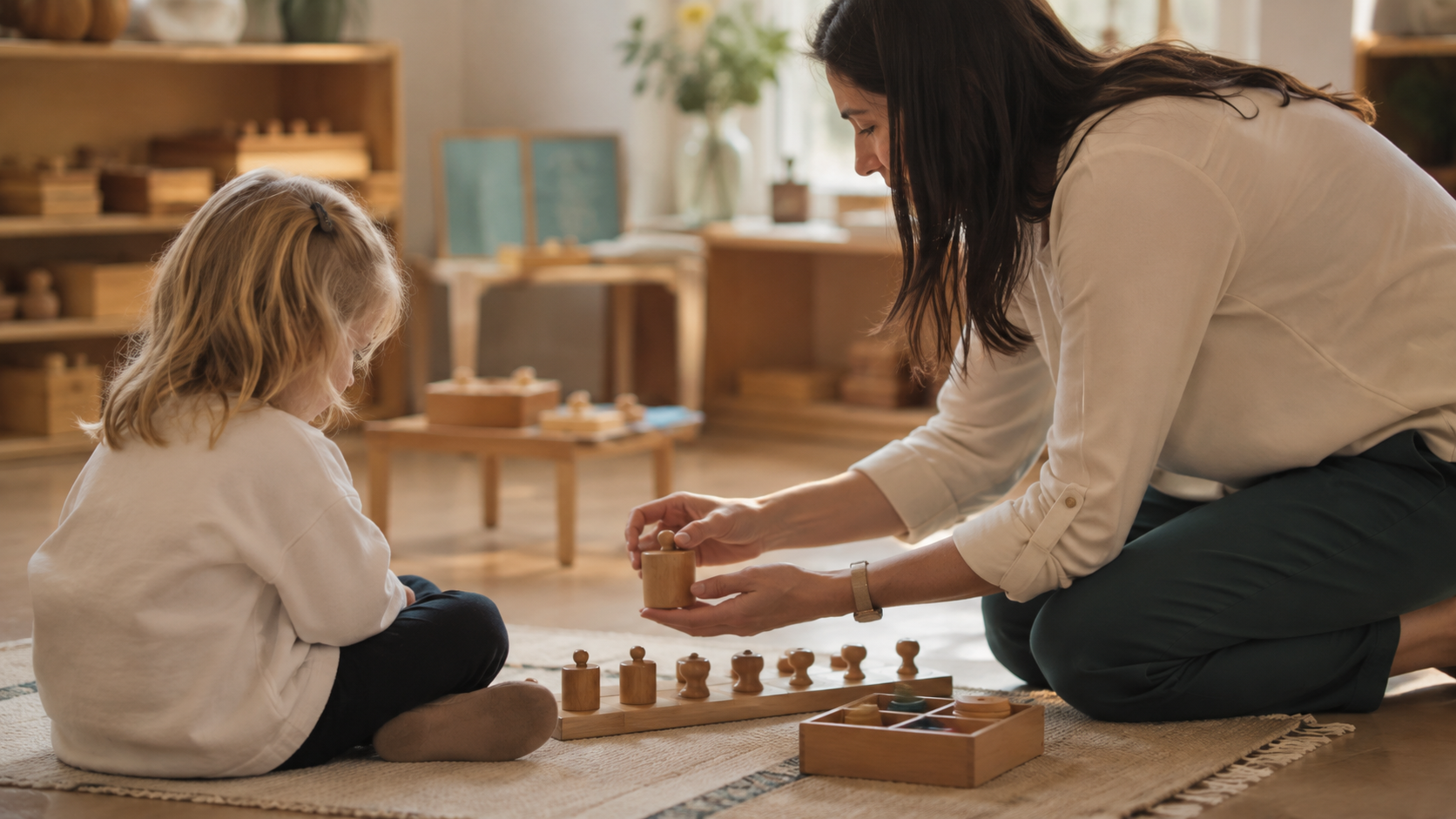
Try watching your child at play without stepping in. What are they drawn to? What are they working to master? Montessori guides are trained observers, and parents can borrow the skill. When you follow your child's genuine interests rather than a schedule of enrichment activities, you will often find they teach themselves far more than you could have planned.
Protect concentration and limit the noise
When your child is absorbed in something, a puzzle, a pile of blocks, pouring water back and forth, resist the urge to interrupt, praise, or redirect. That deep concentration is precious and worth protecting. It also helps to keep screens and background noise low, especially in the early years, so there is room for the quiet, self-directed focus that Montessori prizes.
Let home and school work together
Children thrive on consistency. When the respect, independence, and order they experience at St. Peter's are echoed at home, the two environments reinforce each other and your child feels a reassuring wholeness between them. You do not need to recreate a classroom, just carry the same spirit through your front door. If you would like to see what that looks like in practice, our guides are always glad to talk with parents, and a visit to campus is the best place to start.