One of the most common questions we hear from St. Peter's families is a happy one: "My child is so capable at school — how do I keep that going at home?" The good news is that Montessori at home isn't about buying special materials or recreating a classroom. It's about a mindset — and a handful of small, doable changes that add up to a child who believes "I can do it myself."
Set Up the Environment for "Yes"
Children want to participate in real life. The trick is making it possible for them to do so safely and independently. Look around your home through your child's eyes:
- A low hook by the door for their own coat and bag.
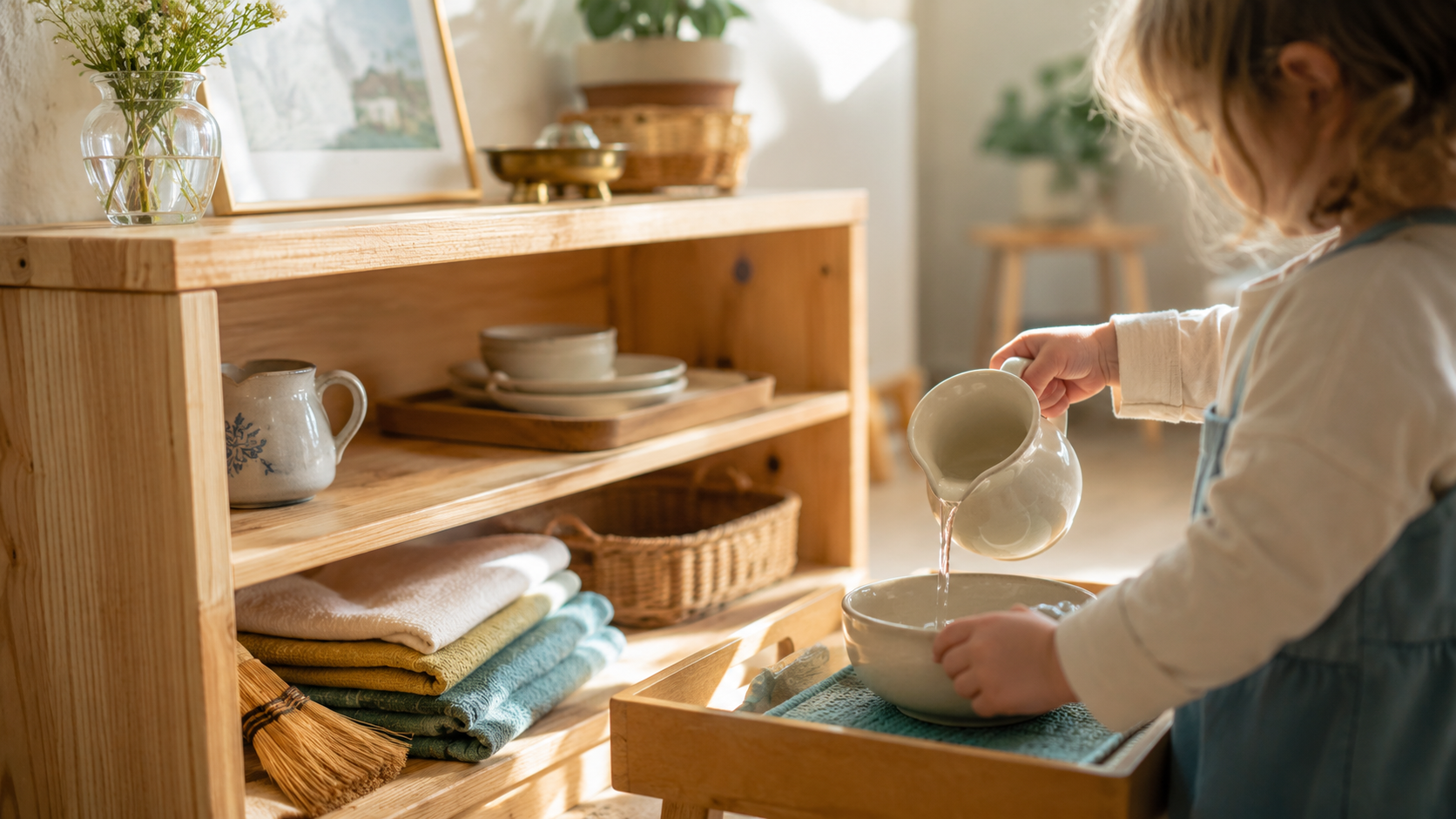
- A small pitcher of water and a few cups they can reach, so they can pour their own drink.
- A step stool at the bathroom sink and the kitchen counter.
- A low shelf with a few carefully chosen toys or activities, rather than an overflowing bin.
When the environment is set up for independence, you stop being the bottleneck for every small task — and your child gets dozens of chances a day to feel capable.
Invite Them Into Real Work
Montessori calls it practical life, and it's exactly what it sounds like: the real work of running a home. Young children are genuinely drawn to it, and it builds concentration, coordination, and confidence far better than most toys.
Let your toddler carry their plate to the sink. Let your four-year-old wash vegetables, match socks, or water the plants. Let your elementary child help plan and cook a simple meal. Yes, it's slower. Yes, it's messier. But you're not just getting help with chores — you're telling your child, "You are a capable, contributing member of this family."
Offer Choices Within Limits
"Freedom within limits" works beautifully at home. Instead of open-ended questions that can overwhelm a young child, offer two good options: "Would you like the blue cup or the green cup?" "Do you want to brush teeth before or after pajamas?" Your child gets the dignity of a real choice; you keep the guardrails that keep your household running.
Slow Down and Observe
Perhaps the most Montessori thing you can do at home is simply to watch before you step in. When your child struggles with a zipper or a puzzle, pause. Give them the gift of the productive struggle. Often they'll work it out — and the pride on their face is worth the extra ninety seconds. When they truly need help, offer just enough to get them unstuck, then step back again.
Protect Time for Deep Play
At school, we protect a long, uninterrupted work cycle because that's when the deepest learning happens. At home, you can offer the same gift: unhurried, unstructured stretches of time where your child can follow their own interests without a screen or a schedule interrupting them. Boredom isn't a problem to solve — it's often the doorway to creativity.
Be Gentle With Yourself
You don't have to do all of this at once, and you certainly don't have to do it perfectly. Pick one idea this week — maybe a low water station, or letting your child dress themselves even when it takes longer. Small, consistent changes are what stick.
The through-line is respect: trusting that your child is competent, capable, and worthy of real responsibility. That's the heart of Montessori, whether it's happening in our classrooms in Litchfield Park or at your own kitchen table.
Want to see how it all comes together at school? Explore our programs or schedule a tour — we'd love to meet your family.