
Where the Montessori method began
In 1907, Dr. Maria Montessori, the first woman to earn a medical degree in Italy, opened the first Casa dei Bambini, or Children's House, in a poor district of Rome. She was not a traditional educator but a physician and scientist, and she approached the classroom the way she approached medicine: by observing carefully and letting the evidence lead. What she saw astonished her. Given purposeful work, beautiful materials, and the freedom to choose, very young children concentrated deeply, taught themselves, and revealed a capacity for focus and order that no one expected.
Over the next four decades she refined her method through observation of children across many countries and cultures, founding the Association Montessori Internationale (AMI) in 1929 to protect and continue the work. Her insights have since been echoed by modern developmental psychology and neuroscience.
The core of the method
Montessori education rests on a handful of principles that work together. Pull any one out and the whole thing weakens.
The prepared environment
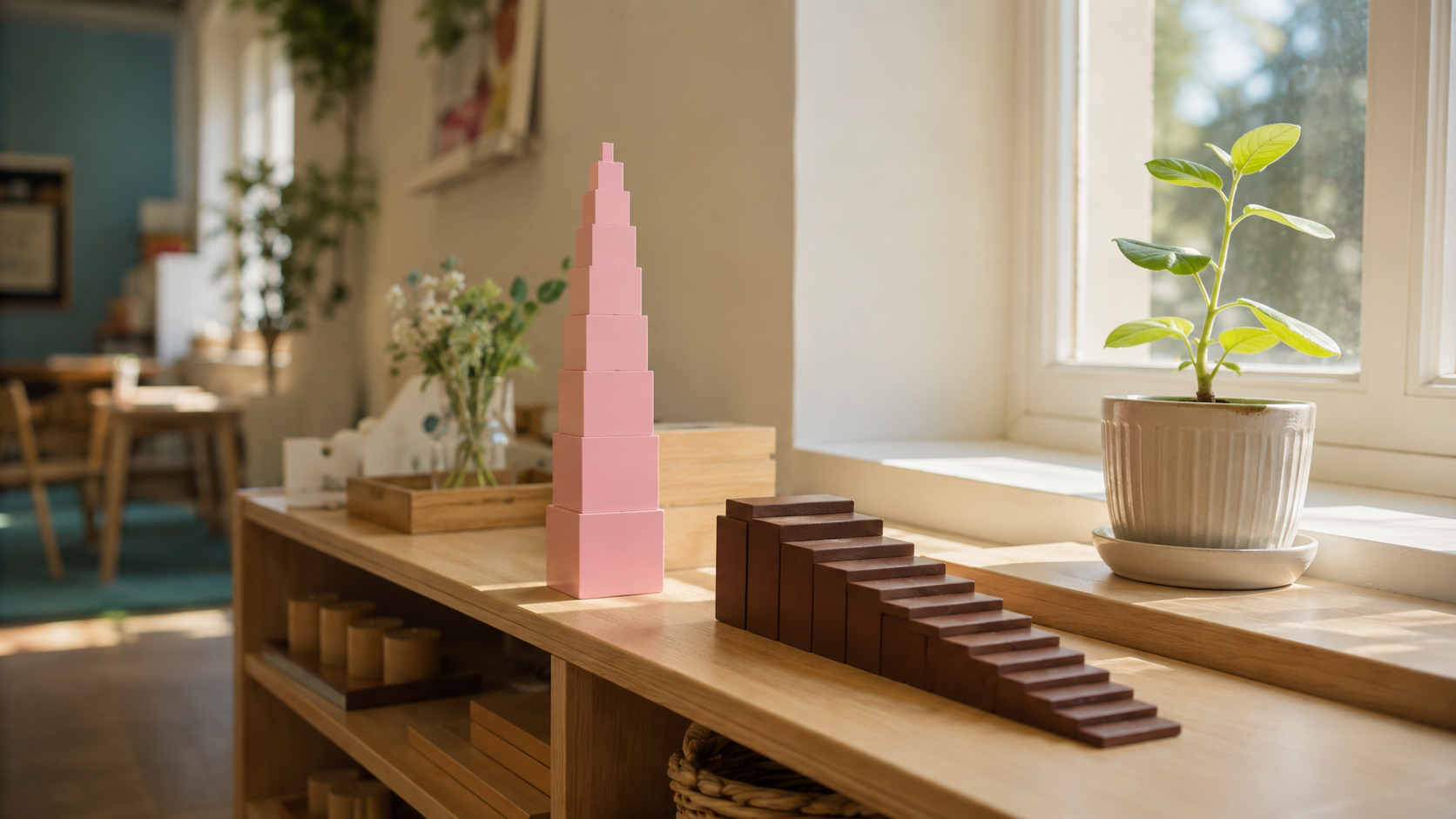
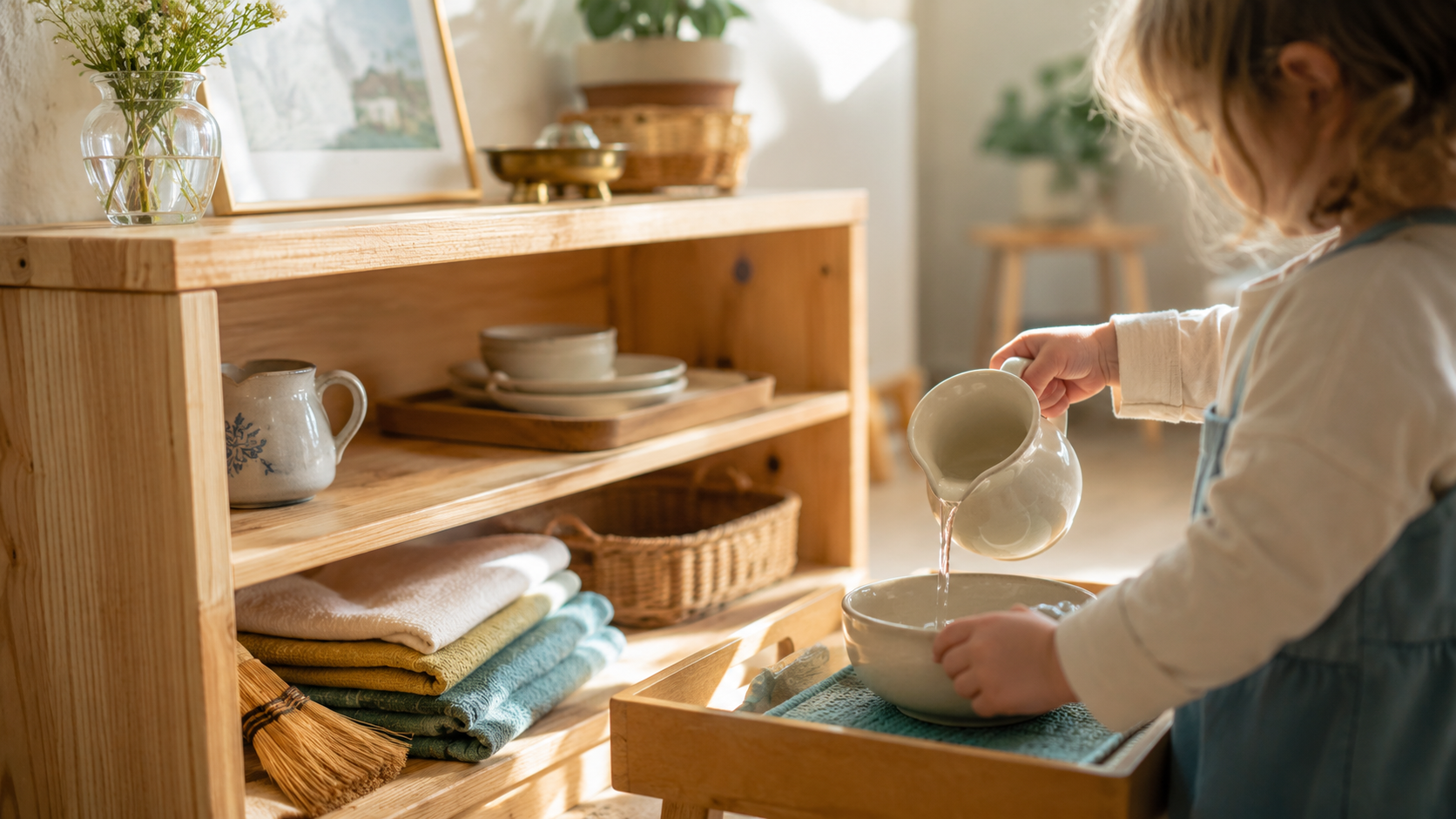
A Montessori classroom is carefully designed so children can act independently within it. Everything is child-sized and within reach; materials sit in ordered sequence on open shelves; the room is calm, beautiful, and free of clutter. The environment itself does much of the teaching, inviting the child toward the next piece of work.
The guide, not the lecturer
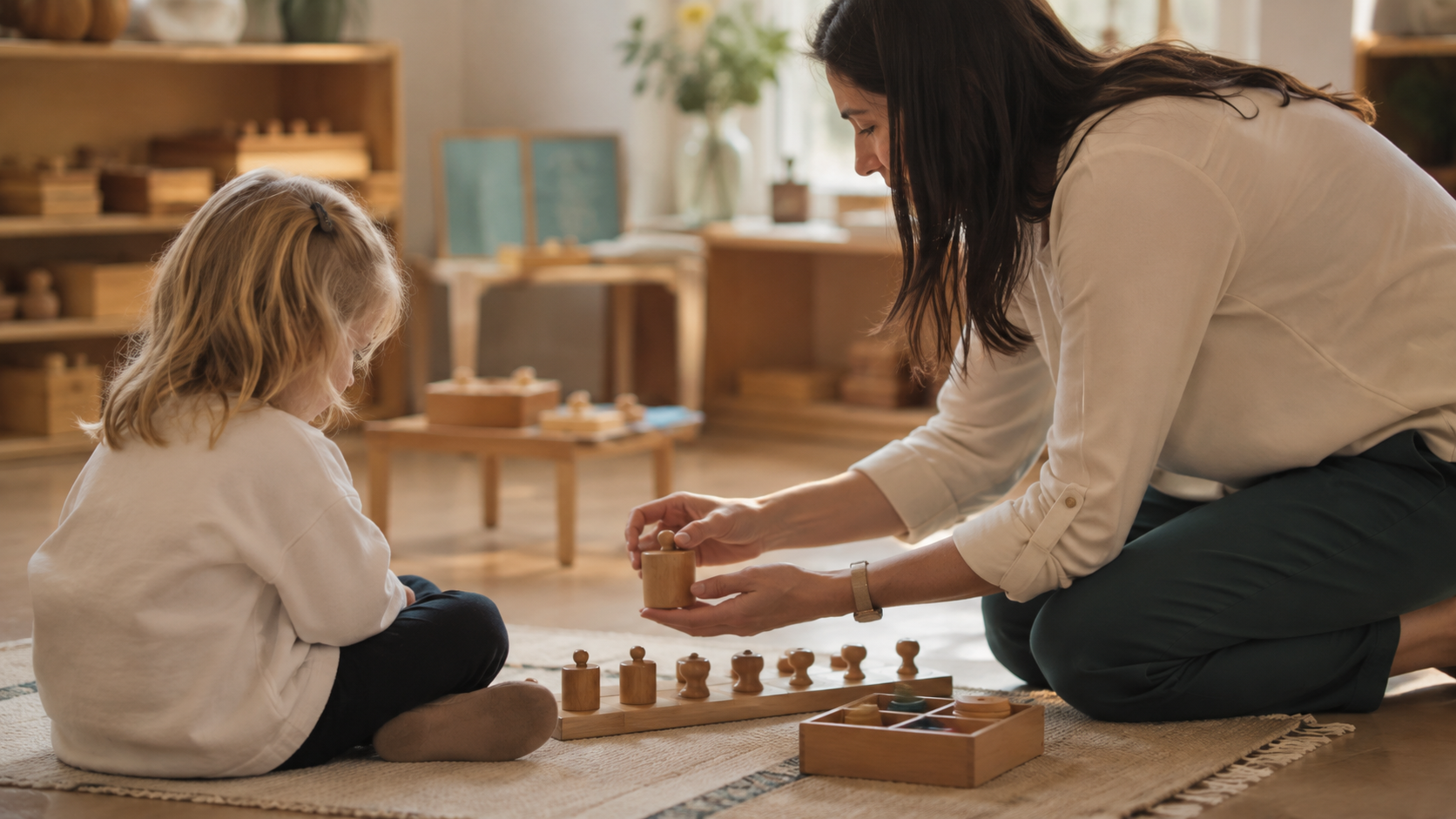
The adult in a Montessori classroom is called a guide for a reason. Rather than delivering lessons to a passive group, the guide observes each child closely, offers a precise individual lesson at the moment of readiness, and then steps back so the child can practice and master the skill. The goal is not to hand children information but to connect them with work they can do themselves.
Hands-on, self-correcting materials
Montessori materials are concrete and beautiful, and most contain a built-in control of error, so the child can see and fix a mistake without an adult's correction. A child building the Pink Tower or working with the golden beads is not playing at math and order; they are absorbing real mathematical and physical concepts through the hands, which Montessori called instruments of the intelligence.
Multi-age classrooms and the three-hour work cycle
Children learn in mixed-age groups spanning about three years. Younger children learn by watching older ones; older children deepen their own understanding by helping and modeling. Within a long, uninterrupted work period, at St. Peter's a protected three-hour morning work cycle, children choose their work, concentrate without interruption, and enter the deep engagement that real learning requires.
Freedom within limits
Montessori children are free to choose their work, move about the room, and work at their own pace, but within clear, consistent limits that protect the community and the environment. This balance is how independence and self-discipline grow together.
Why it works
Because the method follows the child rather than a rigid schedule, it meets each student exactly where they are. A child who is ready to read races ahead; a child who needs more time gets it, without shame. Concentration, independence, intrinsic motivation, and a genuine love of learning are not lucky by-products; they are what the environment is designed to produce. Years later, adults who attended Montessori schools often describe the same thing: they learned how to learn, and how to direct themselves.
Authentic Montessori at St. Peter's
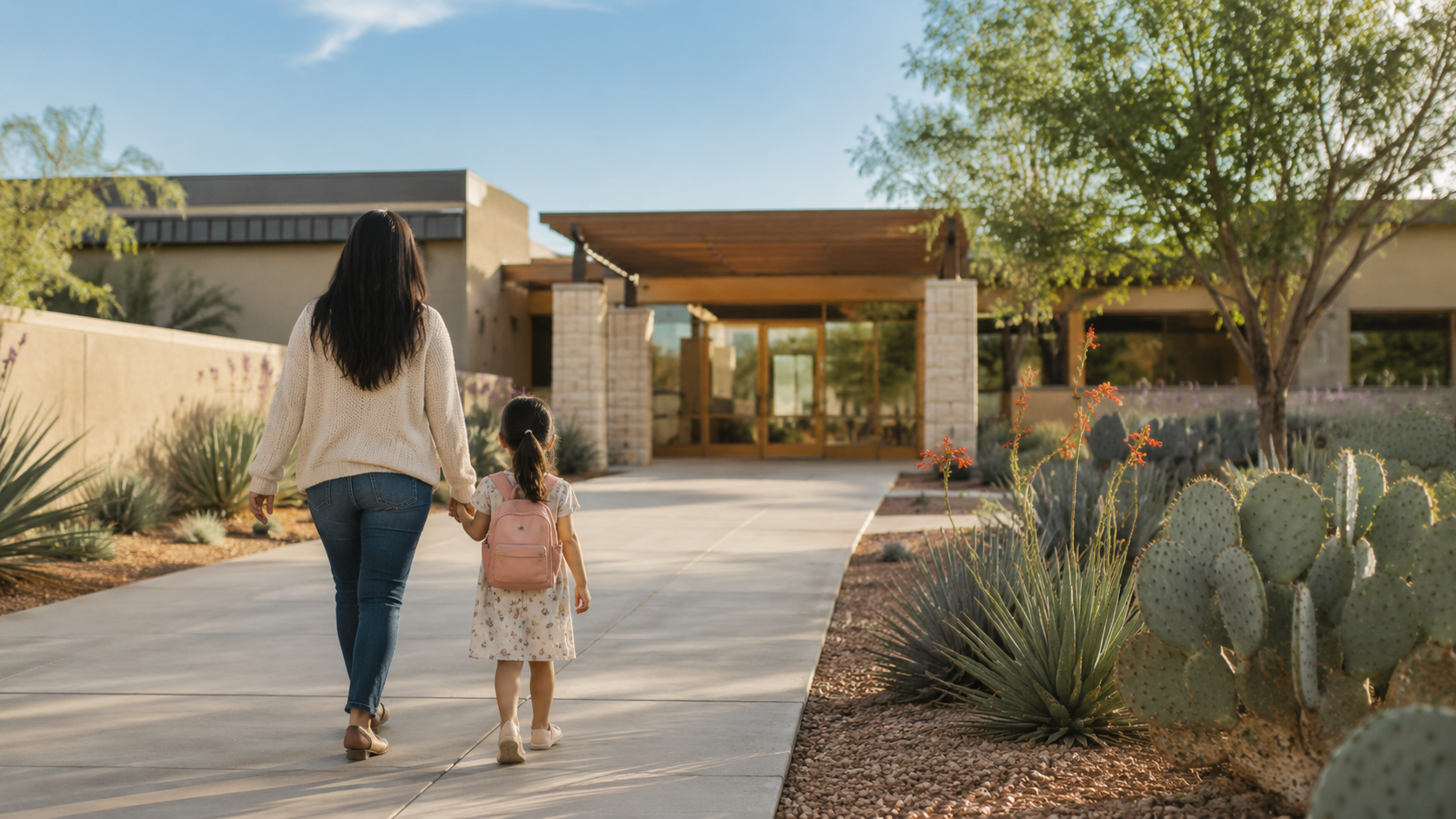
Not every school that uses the Montessori name offers an authentic program. At St. Peter's, we are a member of the Association Montessori Internationale, our guides are Montessori-trained, and our Children's House earned AMI recognition in 2025, an assurance that what happens in our classrooms reflects Dr. Montessori's original method rather than a diluted version of it. We have offered authentic Montessori education in Litchfield Park since 1964, across a full continuum from infancy through the elementary years.