
Not every "Montessori" is Montessori
Because the name is not protected, the quality behind it varies widely. Some schools offer a full, authentic program; others simply borrow the label. Knowing a handful of markers lets you walk into any school and read it quickly, and gives you good questions to ask.
What authentic Montessori looks like
Trained guides
Ask how the teachers were trained. In an authentic program, guides hold Montessori credentials, ideally from a recognized body such as the Association Montessori Internationale (AMI). A degree in general education is not the same as Montessori training.
A long, uninterrupted work cycle
Look for a protected work period of two to three hours, not a bell schedule of short, switching lessons. That uninterrupted time is where deep concentration and real learning happen, and it is one of the clearest markers of the real thing.
Multi-age classrooms and full materials
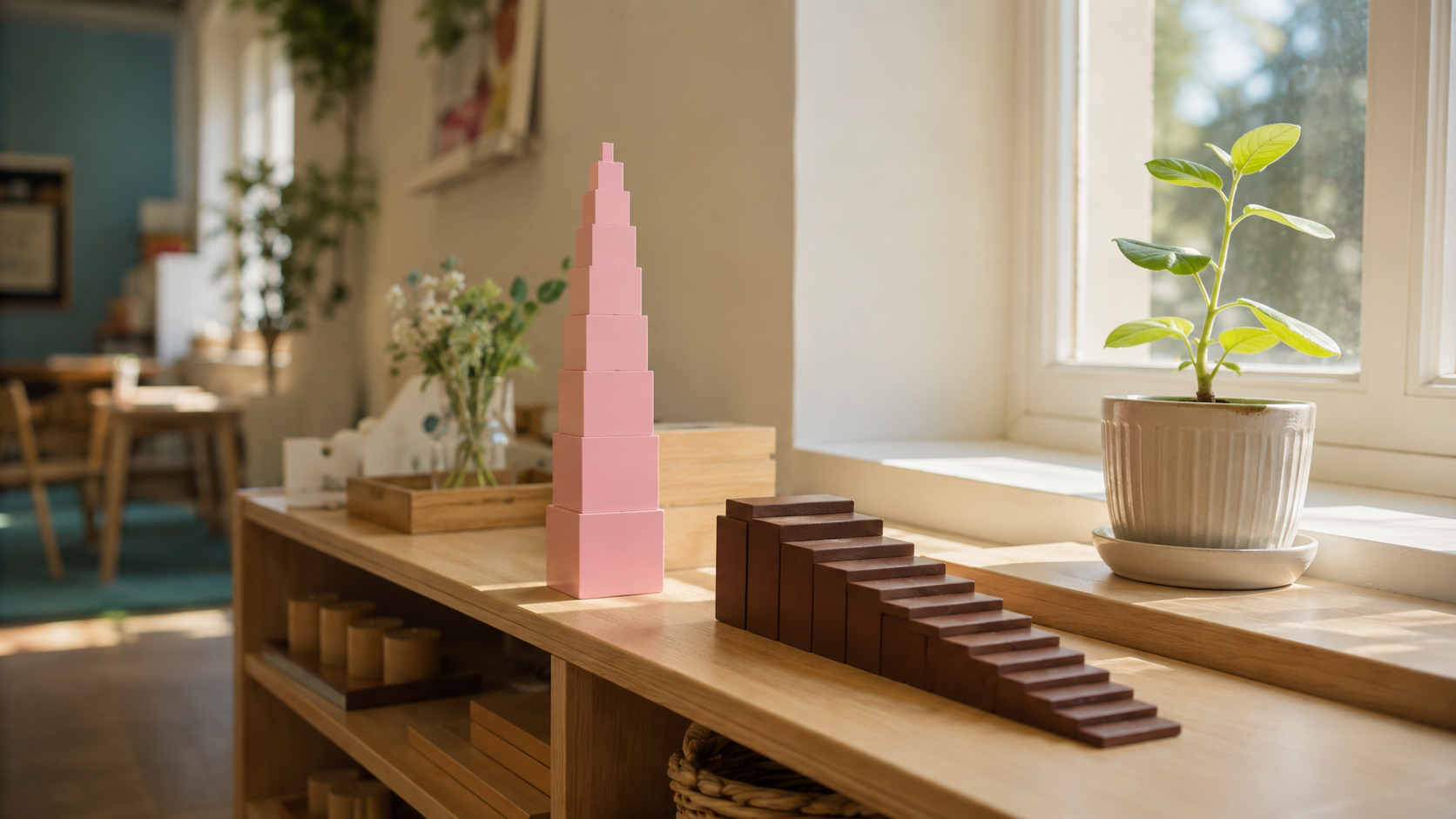
Authentic classrooms group children across about a three-year span and are equipped with the full, sequenced set of Montessori materials on low, open shelves. Be cautious of a room that looks like a conventional classroom with a few wooden toys added.
A prepared environment and a guiding teacher
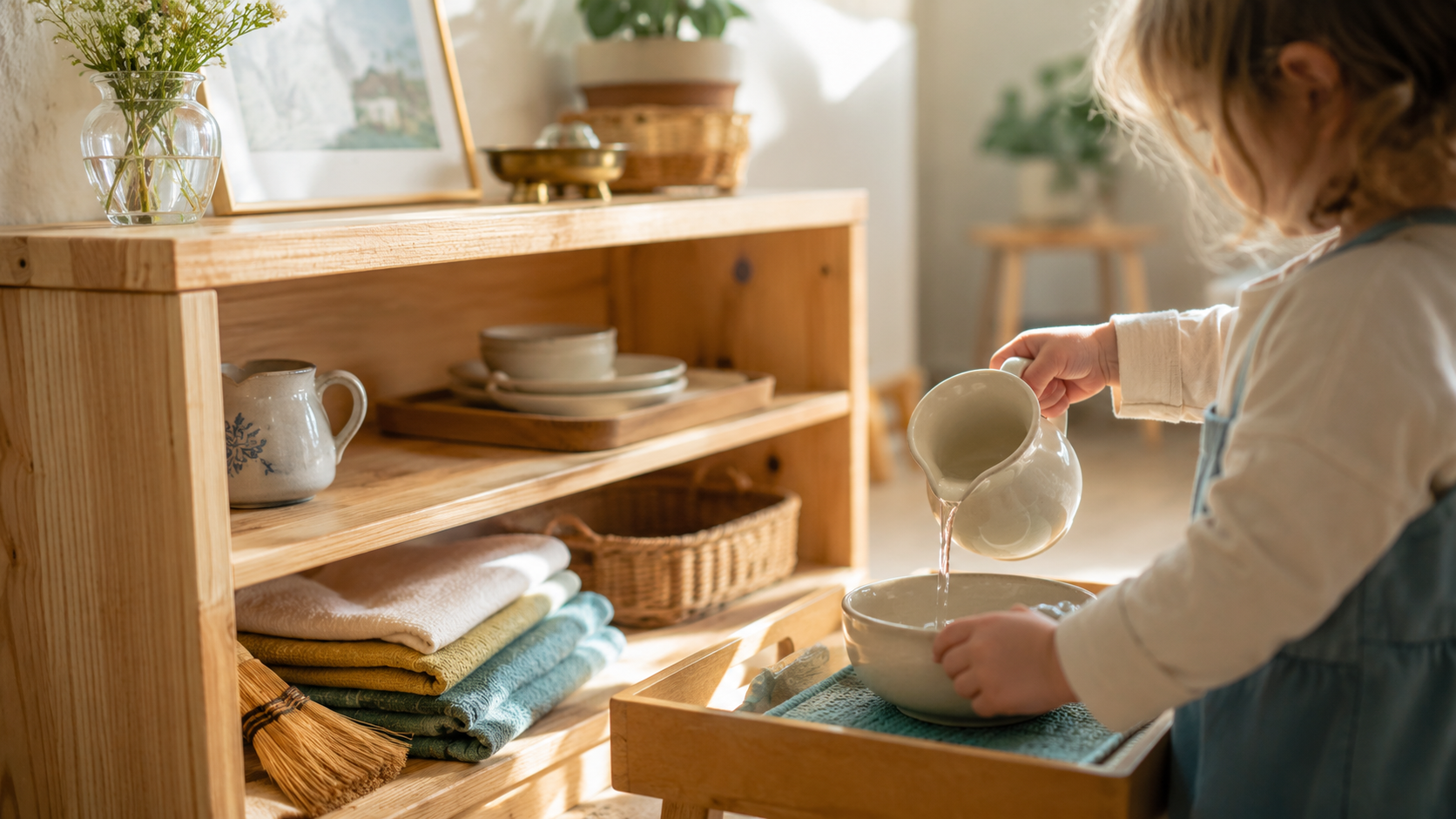
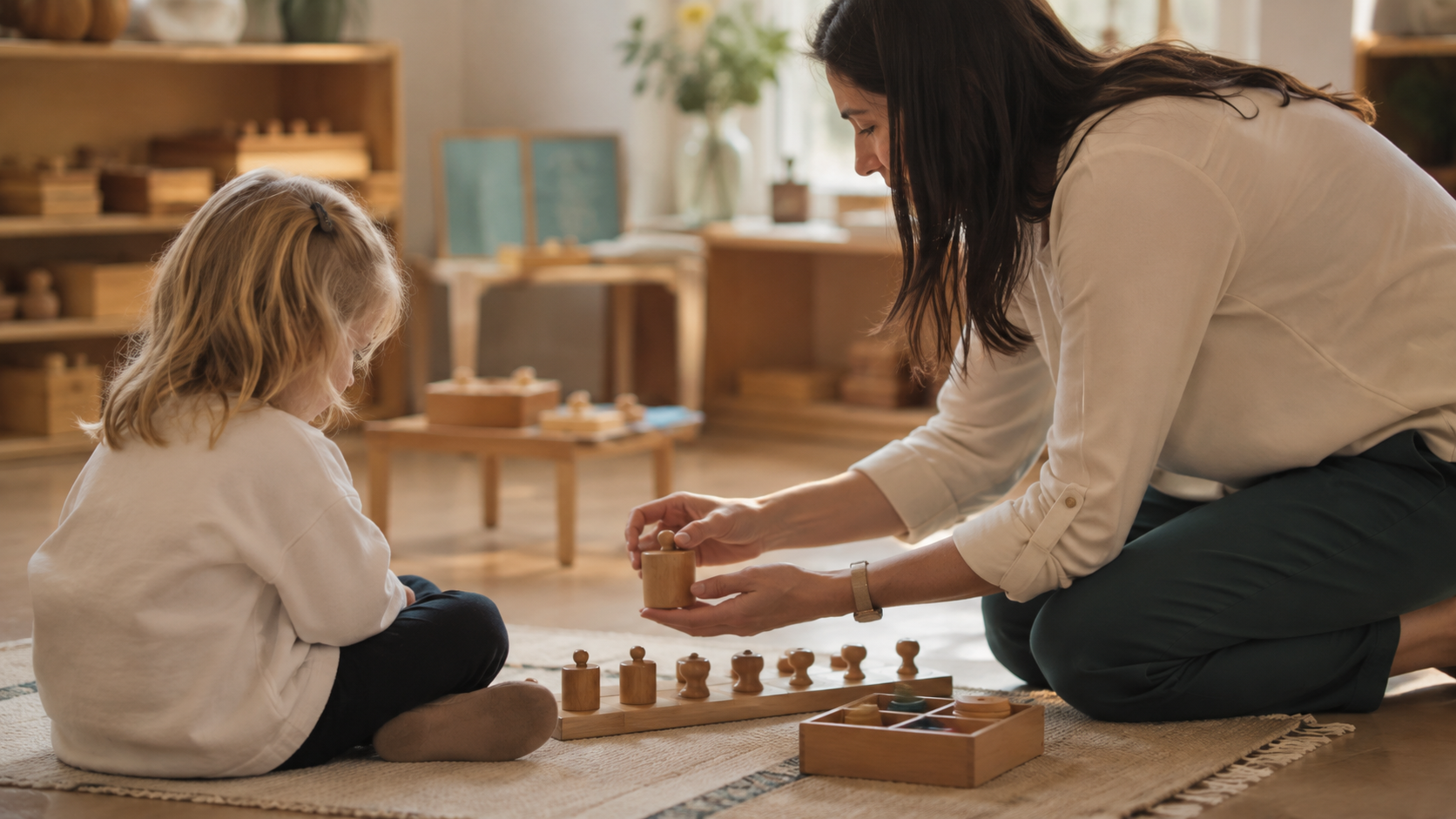
The room should be calm, orderly, child-sized, and beautiful, and the teacher should be moving among children giving individual lessons rather than lecturing to the group.
Visit, and watch the children
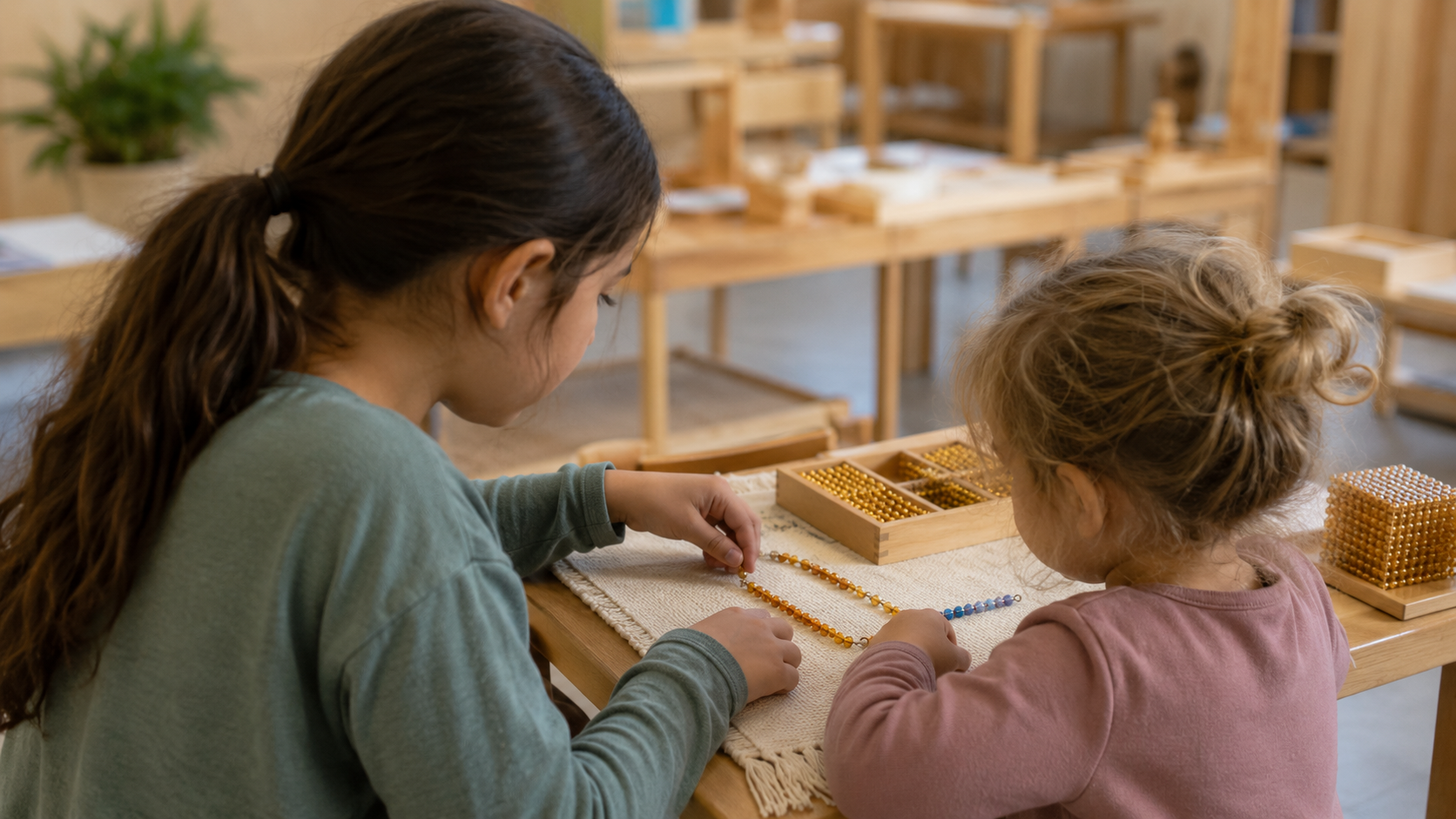
Nothing replaces seeing a classroom in action. When you tour, watch the children more than the adults. Are they absorbed and purposeful? Do they move freely and treat one another and the materials with care? Do they seem to know what to do without being told at every turn? A quietly busy, self-directed room is the surest sign of an authentic program. Ask about the daily rhythm, class sizes and ratios, teacher training, and how the school partners with parents.
The enrollment journey
At most Montessori schools, choosing and enrolling is a relationship, not a transaction. It usually begins with a tour and conversation, followed by an application, and often a visit for your child. Because authentic classrooms keep balanced age groupings and low ratios, spaces can be limited, so it helps to begin the process early, especially for the most sought-after age groups. Many families also have questions about tuition and financial assistance; a good school will talk through those openly.
Choosing St. Peter's
St. Peter's has offered authentic Montessori education in Litchfield Park since 1964. We are a member of the Association Montessori Internationale, our guides are Montessori-trained, and our Children's House earned AMI recognition in 2025. We welcome children across a full continuum, from about three months old in our Nido program through sixth grade in Elementary, and we are proud to be the first Montessori school in Arizona recognized as a Purple Star School for our support of military families. The best next step is simply to come and see us: schedule a tour, watch a classroom at work, and ask us anything.