
A calm room, humming with purpose
The atmosphere of a Montessori classroom surprises most first-time visitors. A guide kneels beside one child, quietly showing a lesson; across the room another child repeats a task for the tenth time with total concentration. Nothing is loud, and nothing is idle. This is what a prepared environment looks like in motion, and it is the result of careful design, not luck.
The prepared environment and its areas
A Montessori classroom is organized into distinct areas, each with materials arranged in careful sequence on low, open shelves.
Practical life
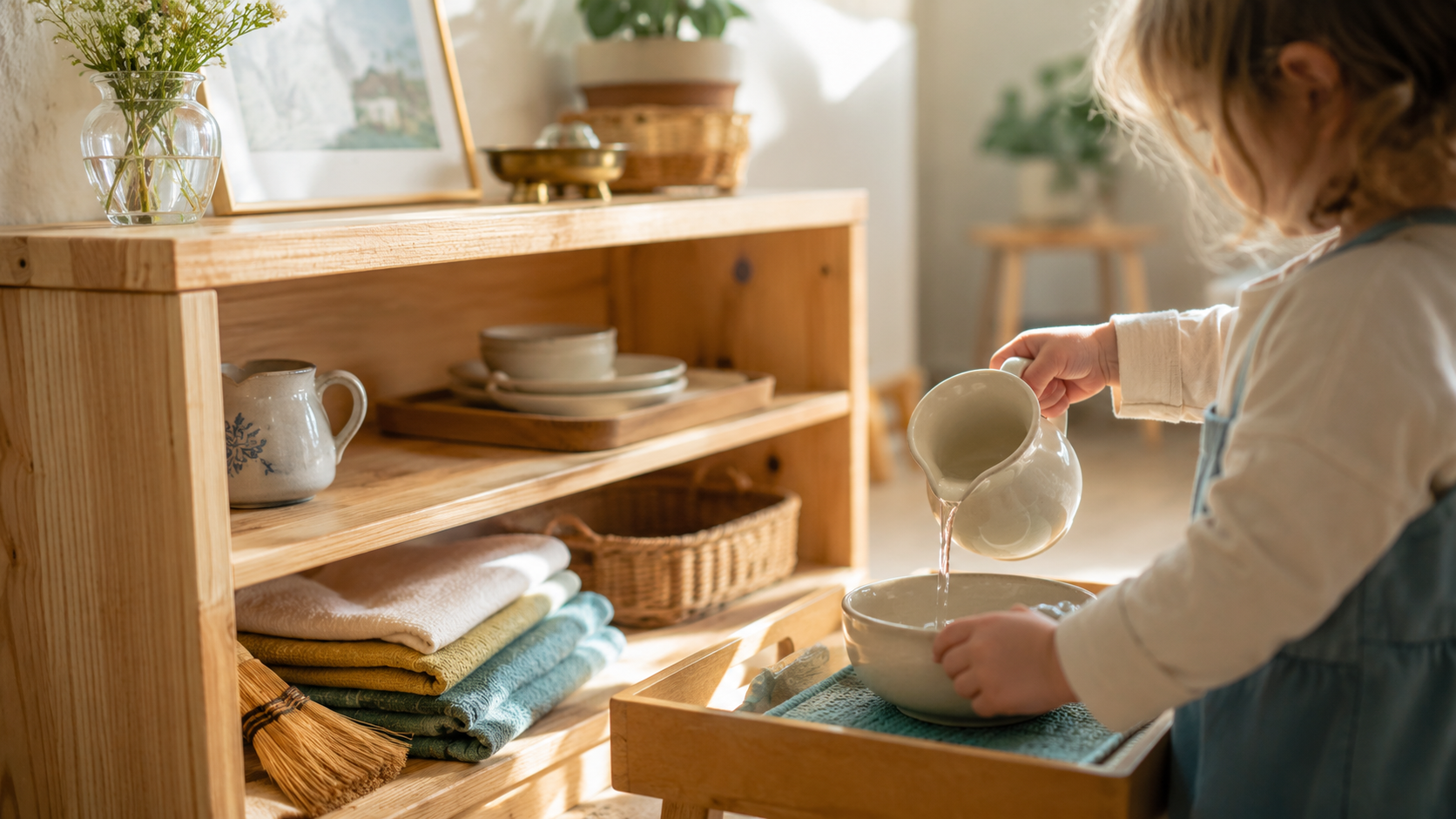
The youngest work often begins here: pouring, spooning, buttoning, polishing, sweeping. These activities build coordination, concentration, order, and independence, and they let a small child do real, purposeful work.
Sensorial
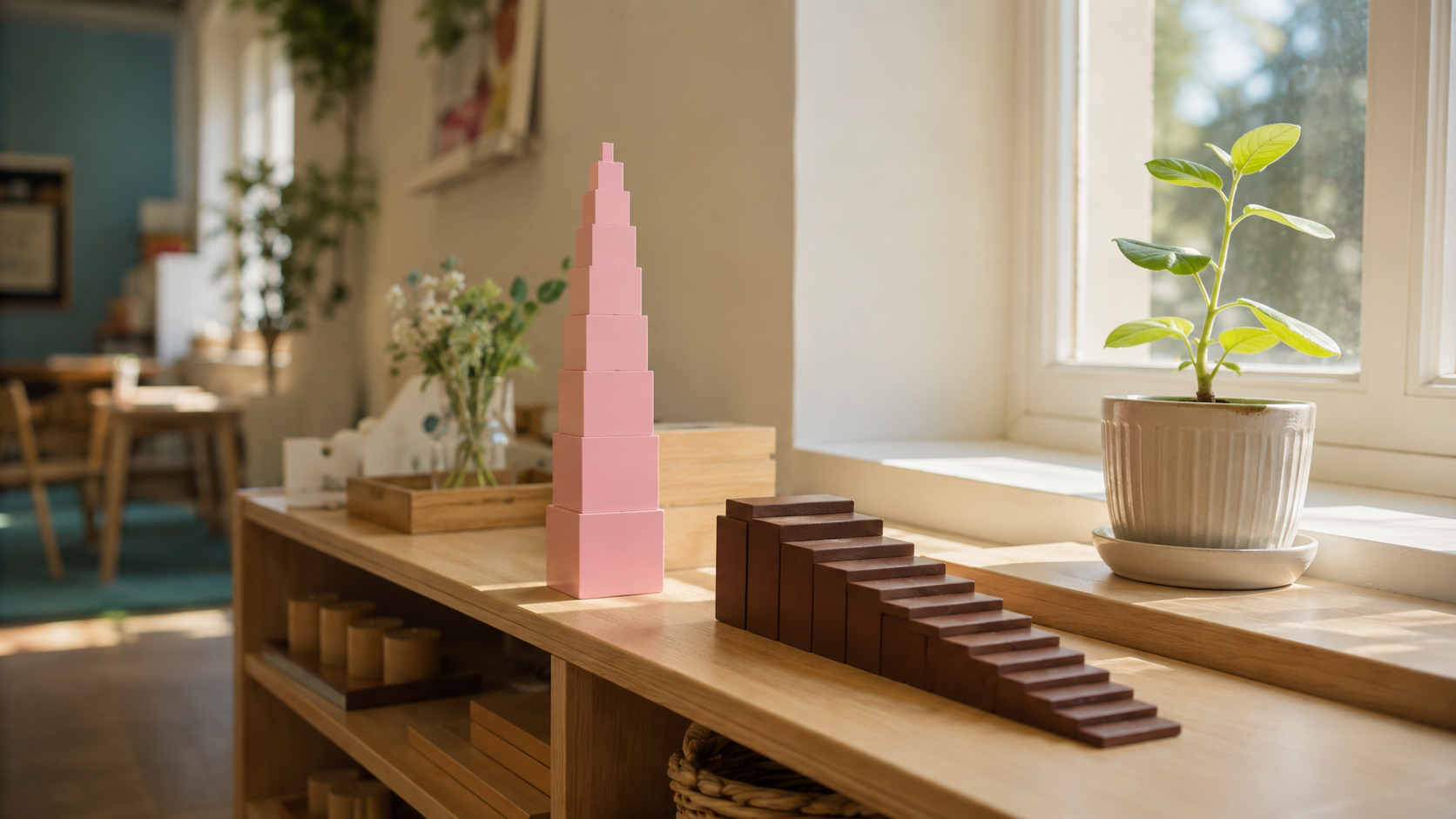
Beautiful materials like the Pink Tower and the color tablets help children refine their senses and classify the world, laying a concrete foundation for later mathematics and language.
Language and mathematics
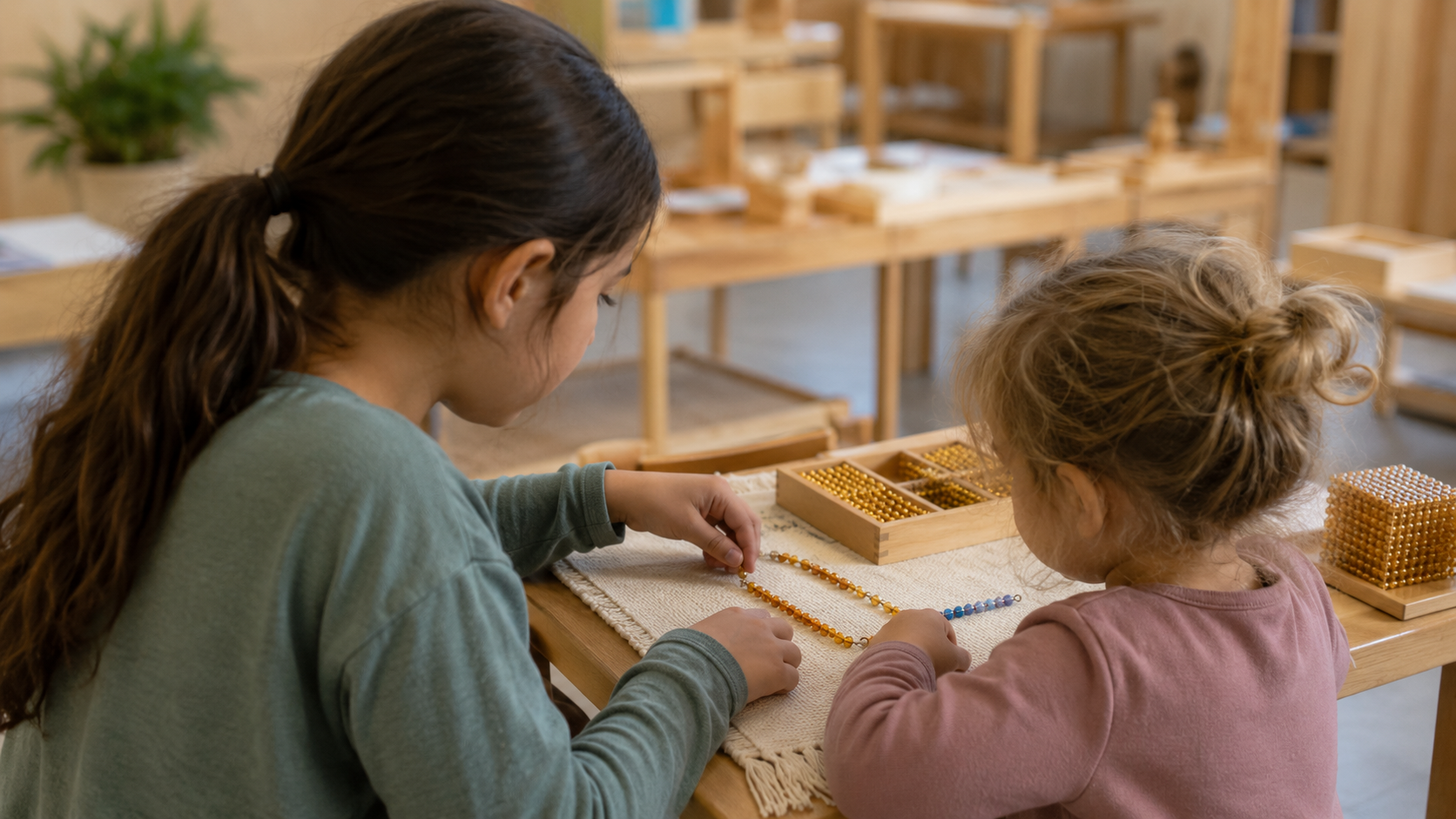
Sandpaper letters, the moveable alphabet, golden beads, and the number rods let children build reading, writing, and mathematical understanding through their hands, moving from the concrete to the abstract at their own pace.
Cultural studies
Geography, science, art, and music open the wider world. At St. Peter's this extends outdoors, where Elementary students work three days a week alongside a Master Gardener in our garden, applying earth science, math, and practical life to real soil and seed.
The three-hour work cycle
Perhaps the most important and least visible feature of the day is the long, uninterrupted work period, a protected three-hour morning cycle at St. Peter's. Within it, children choose their work, repeat it as many times as they need, and reach the deep concentration where real learning happens. It is precisely this uninterrupted time that a bell schedule of short, switching periods cannot provide.
The guide's role
The teacher, called a guide, does not stand at the front and lecture. The guide observes each child, gives precise individual or small-group lessons at the moment of readiness, and then steps back so the child can practice and master the skill independently. Learning is something the child does, not something done to the child.
Mixed ages, grace and courtesy, and belonging
Because classrooms span about three years, younger children learn by watching older ones and older children consolidate their knowledge by helping. Woven through the day are lessons in grace and courtesy, how to greet a visitor, wait for a turn, carry a tray, resolve a disagreement kindly, that build a genuine community. At St. Peter's, that community also includes Spanish woven into daily life through our Spanish-speaking staff and everyday exposure, and the quiet rhythms of chapel, all part of educating the whole child.
No grades, no tests, and deeper learning
You will not find worksheets, gold stars, or exams driving the day. Motivation comes from the work itself and the satisfaction of mastery. Guides assess through careful, continuous observation, which tells them far more than a test could about what each child truly understands and what they are ready for next.