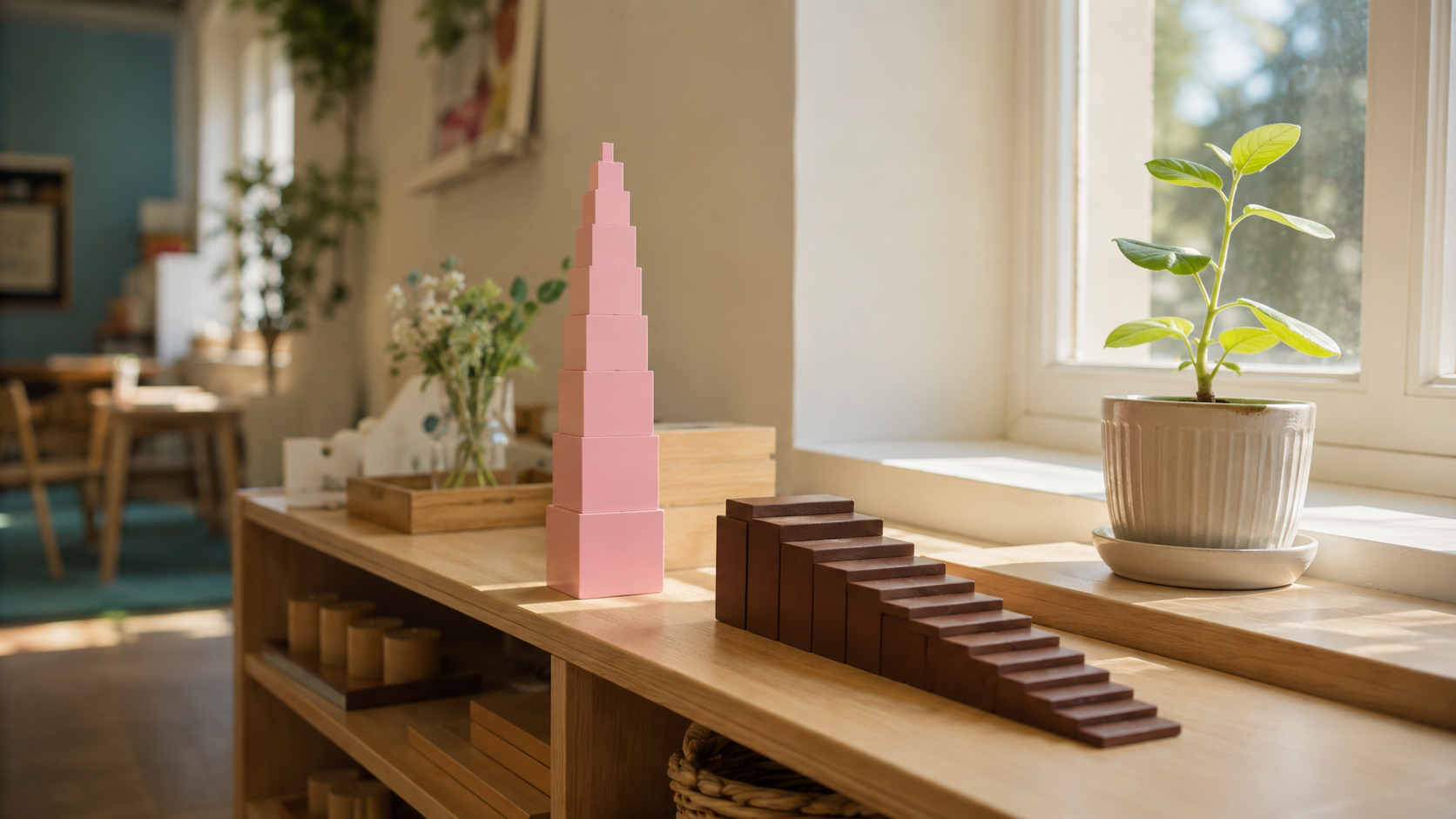
One of Maria Montessori's most enduring insights was that children don't grow in a straight, steady line. They develop in distinct stages — she called them the planes of development — each with its own needs, gifts, and ways of learning. Understanding these planes is part of what lets our guides at St. Peter's meet every child exactly where they are.
The First Plane: Birth to 6 Years
Young children are like sponges, absorbing the world through what Montessori called the Absorbent Mind. From birth to age three, learning happens largely unconsciously, through the senses. From three to six, children move into conscious learning — using their hands and beautifully designed materials to make sense of what they've soaked up.
This is a period of deep order and a fierce drive toward independence. It's the age of "I can do it myself!" — and our Nido and Children's House classrooms are built to honor exactly that.
The Second Plane: 6 to 12 Years
Elementary-aged children turn outward. Friendships and collaboration take center stage, and their imaginations catch fire — which is why so much of Elementary learning begins with story. Through the Great Lessons, big impressionistic narratives spark a genuine hunger for science, history, and geography.
Children in this plane develop a strong sense of fairness and moral reasoning, and they push toward intellectual independence — asking not just what, but why.
The Third Plane: 12 to 18 Years
Adolescents seek independence from adults and lean hard into their peer relationships. They need more sleep, and they crave authentic, meaningful work. Montessori imagined schools where teens could contribute in real ways while building responsibility and refining their own moral compass.
The Fourth Plane: 18 to 24 Years
Young adults move toward true independence — often living away from home, exploring education and career, and forming a clear sense of who they are.
Why It Matters
When you understand that a three-year-old and a nine-year-old aren't just "younger" and "older" but living in genuinely different developmental worlds, everything changes about how you support them. It's the reason a Montessori environment looks so different from grade to grade — and the reason our children move through it with such confidence.
Curious how the planes come to life in a real classroom? Explore our programs or schedule a tour — we'd love to show you.